Kitchen Splashback Ideas: A Guide For Australian Homes
The splashback is one of the most visually prominent surfaces in a kitchen, and one of the most frequently overlooked during the planning phase. Most homeowners spend significant time on cabinetry and benchtop decisions before giving the splashback serious thought, then find themselves scrambling to find something that works with the choices already made. In practice, the best kitchen splashback ideas for Australian homes come from considering all three elements together from the outset. This guide covers the most popular splashback materials, how each one performs, and how to match them to different kitchen styles — with a practical focus for homeowners in the Wollongong and Illawarra region.
Glass Splashbacks: Clean, Seamless and Easy to Maintain
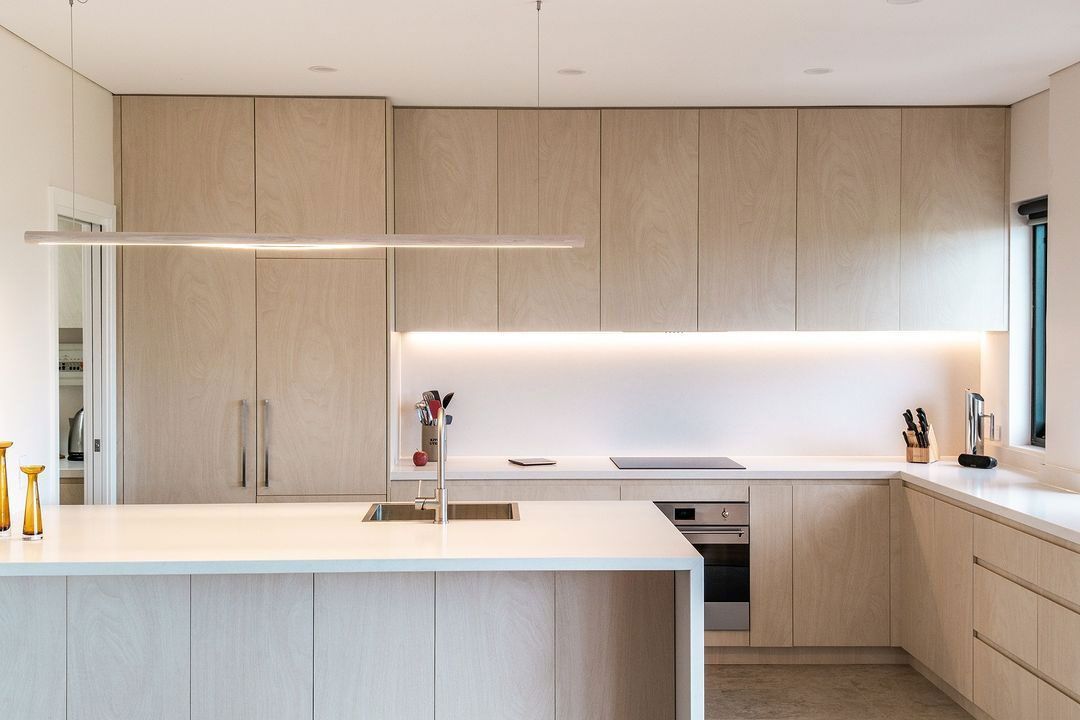
cooktop and benchtop area, creating a seamless surface with no grout lines to clean. The colour range is essentially unlimited — the glass is painted on the reverse side, meaning any colour can be matched to the cabinetry or benchtop. This makes glass an excellent choice for kitchens where a clean, coordinated look is the goal.
Glass is also highly practical in terms of maintenance. A single flat surface with no joins wipes clean quickly and does not harbour bacteria or stain the way grout lines can. It reflects light well, which can make a smaller kitchen feel more open.
If you are exploring kitchen splashback options in Wollongong, our team can help you coordinate a glass splashback with your cabinetry and benchtop to achieve a cohesive, finished result.
- Best suited to: Contemporary, minimalist and coastal kitchens where a seamless, low-maintenance surface is the priority.
Tile Splashbacks: Versatile, Textural and Timeless
A tile splashback kitchen remains one of the most versatile choices available. The range of tile formats, colours, textures and finishes on the Australian market is vast, meaning tile can suit almost any kitchen style from traditional to thoroughly modern.
Subway tiles in a classic brick pattern are a perennial favourite — clean, affordable and compatible with both white and coloured cabinetry. Large-format tiles create a more contemporary look and reduce visible grout lines. Handmade or textured tiles introduce warmth and character that suits relaxed, coastal or heritage-inspired kitchens.
- What splashback goes with white cabinets? White subway tiles are the classic pairing, but a contrasting dark tile or a textured handmade tile in a warm neutral adds visual interest without competing with the cabinetry.
- Best suited to: Traditional, Hamptons, coastal and eclectic kitchens where texture and character are part of the design brief.
Stone Splashbacks: Natural Beauty With Practical Considerations
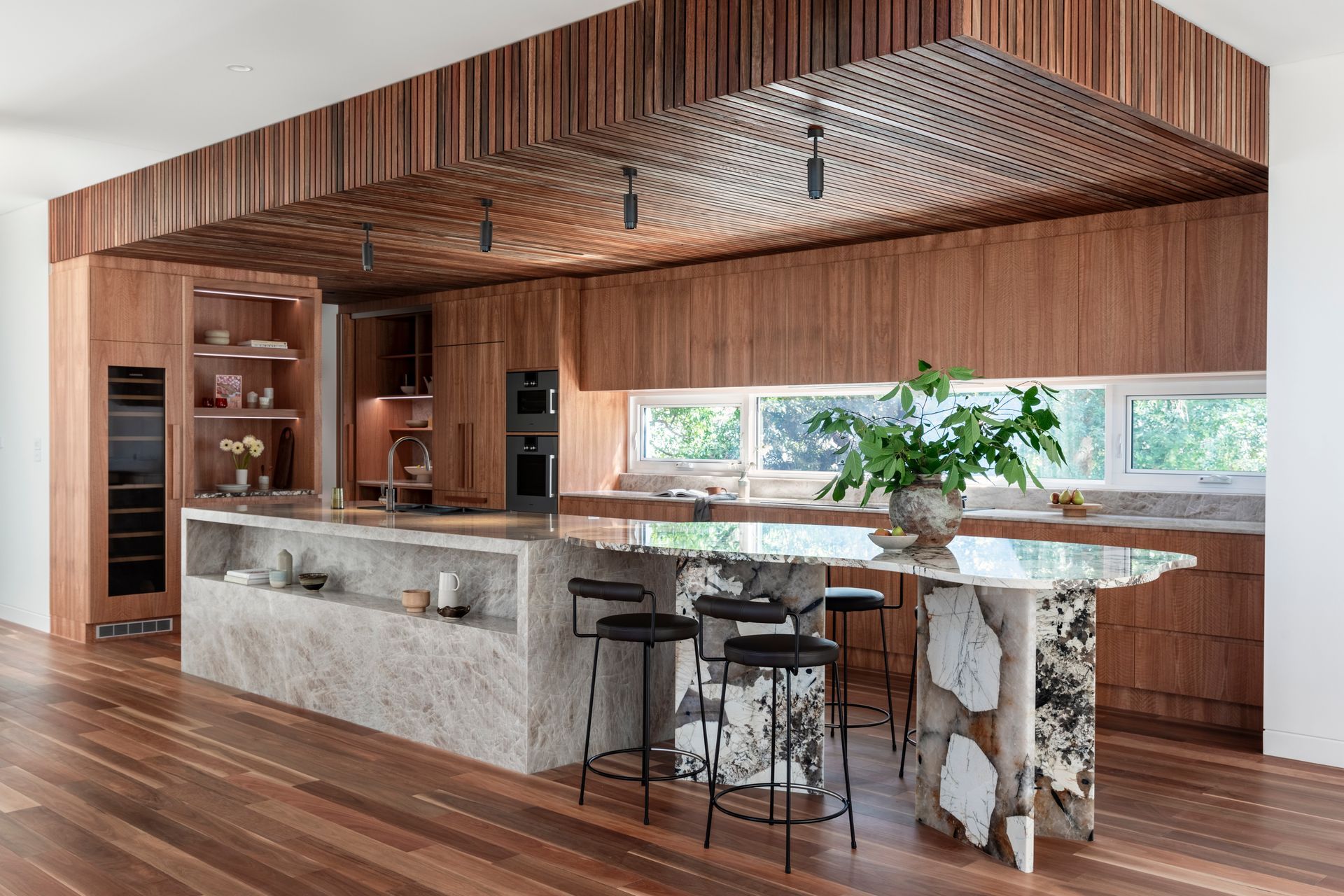
Stone splashback ideas have grown in popularity alongside the broader move toward natural materials in Australian interiors. Marble, travertine and other natural stones bring warmth and organic variation that engineered products cannot fully replicate, and continuing the benchtop stone up the wall as a splashback creates a cohesive, luxurious result.
The practicalities of natural stone in a cooking zone are worth understanding before committing. Natural stone is porous and requires sealing, and it can be more sensitive to heat and acidic substances than engineered alternatives. Working with your kitchen designer on sealing specifications and care expectations ensures the choice performs as well as it looks over the long term.
When planning a natural stone splashback, it is also worth reading our guide on essential kitchen cabinet features to understand how the splashback interacts with other key design decisions in the overall kitchen.
- Best suited to: Luxury, European and country-style kitchens where natural materials and a cohesive benchtop-to-wall result are the priority.
Engineered Stone Splashbacks: Performance Meets Aesthetics
Engineered stone has become one of the dominant materials in Australian kitchen design, and extending it from the benchtop up the wall as a splashback is an increasingly popular approach. Brands like Caesarstone, Quantum Quartz and Smartstone offer a broad range of colours and patterns, including options that closely mimic natural marble and granite.
The advantage of engineered stone over natural stone in a splashback application is consistency and durability. It is non-porous, does not require sealing and is significantly more resistant to staining and everyday use. Running the same material from the benchtop to the splashback creates a seamless, visually unified result.
We supply and install a wide range of benchtops and splashbacks in engineered stone and other materials to suit every kitchen style and budget — from simple, paired-back designs through to fully custom configurations.
- Best suited to: Contemporary and modern kitchens where cohesion with the benchtop and low maintenance are the priority.
Is Glass or Tile Better for a Kitchen Splashback?
This is one of the most common questions homeowners ask when planning a renovation, and the honest answer is that it depends on the kitchen. Glass delivers a seamless, low-maintenance surface that suits contemporary spaces and coordinates easily with any cabinetry colour. Tile offers more design variety and tactile warmth, making it better suited to traditional, coastal or eclectic kitchens where texture is part of the design brief.
Engineered stone offers a strong middle ground when cohesion with the benchtop is the priority. For kitchens where the benchtop and splashback need to feel like a single continuous surface, running the same stone material up the wall is often the most resolved outcome.
The best approach is to consider the splashback material alongside the benchtop, cabinetry and overall kitchen style before making a final decision — not after.
Matching Your Splashback to Your Kitchen Style
A few principles apply regardless of the material you are considering. The splashback does not need to match the benchtop exactly — it needs to complement it. A white marble-effect engineered stone benchtop paired with a warm-toned textured tile creates a layered, interesting result. A dark stone benchtop with a glass splashback in a coordinating matte colour creates a more restrained, contemporary look.
With white cabinetry, the splashback becomes an opportunity to introduce texture, colour or pattern without overwhelming the space. With coloured cabinetry, a more neutral splashback that picks up a tone from the cabinet colour tends to be the most cohesive approach. Every element of our custom kitchens in Wollongong is designed to work together from the first conversation to the finished installation, and the splashback is no exception.
Splashback Trends in Australian Kitchens Right Now
A few directions are consistently popular in Australian kitchen design at the moment. Fluted and ribbed tiles are appearing more frequently as homeowners look to introduce texture without bold colour. Earthy, warm-toned palettes — terracotta, sage, warm white and natural stone — continue to influence both tile and glass splashback choices. Large-format porcelain tiles with minimal grout lines are growing in popularity as an alternative to natural stone, offering similar aesthetics at a lower price point and with less maintenance.
For Wollongong and Illawarra kitchens, the coastal environment naturally draws many homeowners toward light, airy palettes — whites, soft blues and natural timbers — where a glass or light tile splashback tends to feel the most at home. That said, the trend toward warmer, more textured interiors is equally present locally, and a kitchen designed around natural stone or handmade tile can feel just as right in this region.
Ready to Plan Your Kitchen Splashback?
Choosing the right splashback is easier when you have the right guidance and can see materials in context. Paiano Custom Kitchens works with homeowners across Wollongong and the Illawarra to design and install kitchens where every element — cabinetry, benchtop and splashback — works together as a considered whole. Visit our showroom in Corrimal or get in touch today to arrange a consultation and start exploring kitchen splashback ideas for your Australian home.